
If you’re thinking about gorilla trekking in Volcanoes National Park, Rwanda, congrats—you’re about to check off one of the coolest experiences on Earth (and possibly the most expensive hour of your life). But trust me, it’s worth every penny. Before you go traipsing through the jungle, there are a few things you need to know—like how much it’ll cost you, how sweaty you’re going to get, and how to avoid looking like a total rookie out there. Let’s dive in.

Do You Need a Permit for Gorilla Trekking in Rwanda?
A gorilla trekking permit is required and should be booked well in advance. The cost for a Rwanda gorilla permit is $1,500 per person per day. Due to high demand, it’s recommended to secure your permit at least 3-6 months in advance, especially if you’re traveling during peak season (June to September and December to February).
Permits can be booked through the Rwanda Development Board (RDB) directly or via a licensed tour operator, who can bundle permits with transportation and accommodations.
Can You Do a Private Gorilla Trek?
Yes! Rwanda offers private gorilla trekking experiences, though they come at a premium. A fully private trek costs $15,000 per group (up to 8 people), allowing you to have an exclusive, intimate encounter with a gorilla family. This option is ideal for photographers, researchers, or those looking for a more personalized experience.
How Many Gorilla Families Are in Volcanoes National Park?
Volcanoes National Park is home to 12 habituated gorilla families that are available for trekking. Each group is limited to 8 visitors per day, meaning only 96 permits are issued daily.
Other gorilla families in the park are strictly for research and conservation purposes and are not accessible to tourists.
How Is Gorilla Trekking Managed Sustainably?
Gorilla trekking in Rwanda follows strict conservation guidelines to ensure that the gorillas remain healthy, safe, and undisturbed. Measures in place include:
Conservation Funding: A portion of permit fees supports anti-poaching patrols, habitat preservation, and local community projects.
Are the Gorillas Well Taken Care Of?
Yes, mountain gorillas in Volcanoes National Park are heavily protected by rangers and conservationists. The Dian Fossey Gorilla Fund and the Rwanda Development Board actively monitor and protect gorilla families from poaching, habitat destruction, and disease transmission.
Trackers visit each gorilla family daily, ensuring their safety, observing their health, and keeping detailed records of their movements and behavior.\

What’s Included in the Permit Cost?
Your $1,500 gorilla trekking permit includes:
Guided trek with an experienced ranger, and full team
Park entrance fees
One hour with a habituated gorilla family
Security and anti-poaching patrols
Conservation funding to protect the gorillas
What’s NOT included?
Transportation to and from the park
Porter fees ($10-$20, optional but highly recommended)
Tips for guides and rangers
Accommodation and meals
Planning Your Gorilla Trek: Do You Need a Safari or Can You Do It Yourself?
You can technically plan a gorilla trek yourself, but it’s much easier with a tour company.
Booking through a tour operator: They handle permits, transportation, accommodations, and logistics, which is especially helpful if you’re on a tight schedule.
Booking independently: If you’re comfortable navigating Rwanda, you can book your permit directly through the Rwanda Development Board and arrange a private driver or rental car to reach the park. However, it requires more time, research, and coordination.
Most hotels near Volcanoes National Park can help arrange transportation and recommend trusted guides.
Permit Limits: A strict cap of 96 trekkers per day prevents overcrowding and minimizes human impact.
Time Restrictions: Each group spends a maximum of one hour with the gorillas.
Health Precautions: Tourists must stay 7 meters (23 feet) away from gorillas, and visitors showing signs of illness may be denied entry.
Do I need a guide? Can probably book through your hotel, but having someone to help you navigate is helpful. Still need a driver to get you there etc.
Best Travel Companies for Gorilla Trekking in Rwanda
Here are some reliable tour operators that specialize in Rwanda gorilla treks:
- Safari Vacations and Travel Services – Our personal guide, Jason, runs this company, and he was fantastic. Highly budget-friendly, knowledgeable, and fun to travel with.
- Volcanoes Safaris – A well-established, eco-conscious company with high-end, luxury tours.
- Primate Safaris Rwanda – Focuses on primate-focused experiences with custom itineraries.
- Rwanda Eco Company & Safaris – Known for sustainable, community-focused tours
How Difficult Is the Trek?
Gorilla trekking is moderately to highly difficult, depending on the terrain and the gorilla family’s location that day.
- Each group is assigned a gorilla family in different areas of the park, meaning some hikes are short, while others are long and strenuous.
- Rangers classify hikes as short (30 min–1 hour), medium (2–3 hours), and long (4+ hours).
- Since Volcanoes National Park is at high altitude (2,500m – 4,500m/8,200ft – 14,800ft), expect steep, muddy, and uneven terrain.
Our trek was considered “medium”—it took us 2 hours to reach the gorillas and 1 hour to return. The night before, we met a couple whose trek took 4+ hours, entirely uphill. You never know what you’re going to get!

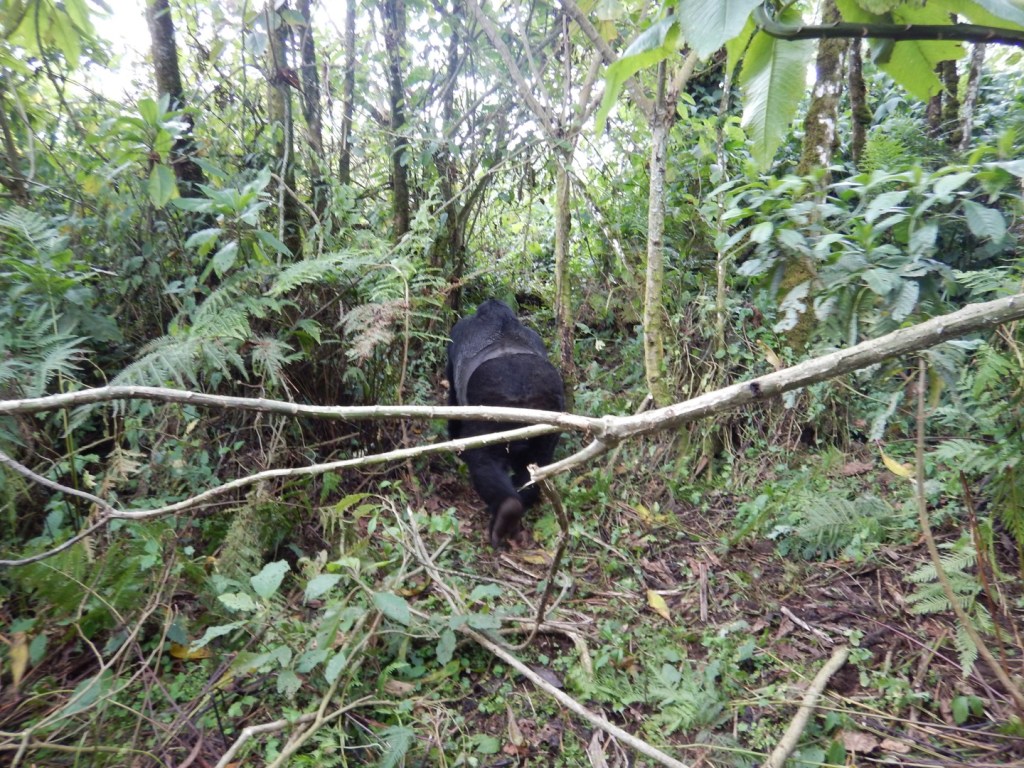
And keep in mind, it’s called a “trek” because you certainly are trekking. There are no defined trails once you get into the forest, you’re literally following a man with a machete who is creating the trails. You’re working with trackers who visit the gorillas every day and know their estimated location, who are helping you guide your group to them.
If you do have any sort of physical issues or want a shorter hike, you can certainly alert that day’s guide and they can see if they can help to locate you in a group that is more likely to see a gorilla trek sooner. There are also “porters” that you can (and should) hire for the day to help carry your stuff. The reason that you should, is that it helps that porter support their family. Even if you’re very physically fit, it’s nice to pay them $20/day to help support. Cheers to a great guide who was also on the trek with us for cluing us into this!
Do I need a tour operator?
I’m generally pretty opposed to hiring tour operators. I like to book everything myself and be in full control over my experience (Type A much?). I found that this was not always the best option in East Africa. So I would absolutely recommend hiring a tour company or guide to help navigate these waters. Since you must book directly with the respective governments, it’s definitely nice to have a third party.
We hired a guide that was very affordable compared to others. His name is Jason, and he specializes in Uganda and Rwanda tours. Being from Uganda himself, he was certainly a bit more biased toward doing a trek in Uganda, but took us on an awesomely planned 2-day tour in Rwanda still. His company is called Safari Vacations and Travel Services, you can check out his Tripadvisor reviews here. We were originally going to do this package in Uganda, but instead did a very shortened version of this one. You can contact Jason on Jason on WhatsApp +256776423286

Do I Need a Guide?
Yes, guides are mandatory. Government-assigned guides lead all treks—you cannot go gorilla trekking alone. These rangers are highly trained and carry firearms for safety in case of wildlife encounters. What I didn’t initially understand was that Jason, our tour operator (and guide for everything else), was not going to physically be leading us on the trek. That’s all done with the government officials in Rwanda.
Private guides/tour companies: While a private guide is not required, I strongly recommend hiring a tour company to help with logistics, permits, and transport.
Our guide, Jason, from Safari Vacations and Travel Services was incredibly helpful. He arranged our permits, transportation, and hotels but did not lead the trek itself (this is always done by park rangers)
How Far Are the Gorillas from Base Camp?
It depends. Some groups find gorillas within 30 minutes, while others hike for 4–5 hours before spotting them. Since gorillas move freely, there’s no fixed distance.
Trackers monitor the gorillas daily and radio their approximate location to the rangers leading your trek
How long do I need to see the gorillas?
You really need only one full day to see the gorillas. But of course, it’s all about accounting for travel time. However, we did come across some folks who were doing multiple days of visiting with gorillas to have different experiences. If you have the budget, and want to visit unique families, this might be a cool idea.
Suggested Itinerary (if planning without a tour operator):
- Day 1: Arrive in Musanze (near Volcanoes National Park), get your COVID test, and stay overnight.
- Day 2: Early morning trek, return by afternoon.
- Day 3 (optional): Visit Dian Fossey’s grave, explore Musanze caves, or do a Golden Monkey trek.
Where to Stay Near Volcanoes National Park?
Luxury Lodges ($800-$2,000 per night)
- Bisate Lodge – Stunning eco-lodge with volcano views.
- Singita Kwitonda Lodge – Ultra-luxury, known for unparalleled service.
- One&Only Gorilla’s Nest – High-end luxury with gourmet dining and private plunge pools.
Mid-Range Lodging ($250-$600 per night)
- Five Volcanoes Boutique Hotel – Comfortable, stylish, and close to the park entrance.
- Mountain Gorilla View Lodge – A great balance of price and comfort.
Budget Options ($50-$200 per night)
- La Locanda – Backpacker-friendly guesthouse with beautiful views.
- Villa Gorilla – Basic but clean and close to Musanze town.
Final Thoughts
Gorilla trekking in Volcanoes National Park, Rwanda, is a bucket-list experience. While the permit cost is high, the opportunity to see endangered mountain gorillas up close in the wild is worth every penny.
Whether you book independently or through a tour company, prepare for an unforgettable adventure in one of Africa’s most breathtaking landscapes.
Got questions? Drop them below! 😊
 What a Lovely Place
Leave a comment