
With abundant wildlife, gorgeous terrain, and incredible people, it’s truly no wonder this is the most popular national park to visit in Kenya. If you read the title of this article, we say mid-range because you really can’t do the Masai Mara on a stereotypical budget – there are no true hostels or super budget-friendly options within the park, you can’t avoid daily entrance fees, and you must be paying for a tour in order to actually see the park.

Getting to the Masai Mara
You have several options to get to the Masai Mara, either by plane, private car, or public transportation.
Traveling to the Masai Mara by plane
The easiest but often most expensive way to get to Masai Mara is by plane. If you’re taking a plane to the Masai Mara you’ll be in a tiny puddle jumper. There are no major airports at the national park, but there are nine airstrips in and around the park. To figure out where we needed to fly into, we just looked at the hotels we were staying at on TripAdvisor and they listed the closest airstrip to fly into. You can also just message your hotel and ask them before you book your flights.

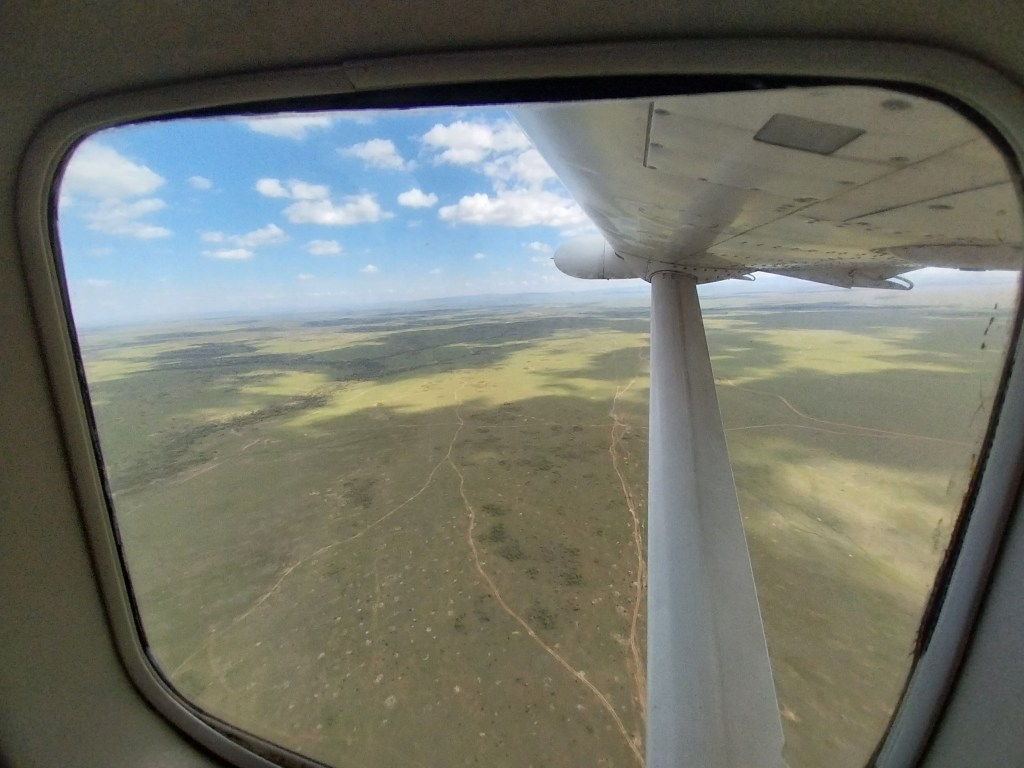
Most of the flights that fly to the Masai Mara are booked in and out of Nairobi. The flight time from Nairobi to Masai Mara is only about 45 minutes, often including a stop of two at multiple airstrips throughout the park. So this is truly such a convenient and fast way to get there. but of course, it’s the most expensive. There are two airports in Nairobi, an international one (Jomo Kenyatta International Airport) and a smaller one for safari planes mainly called Nairobi-Wilson. If leaving Nairobi you’ll be flying out of the smaller, Nairobi-Wilson. We booked on Safarilink and had a great experience.
Traveling to the Masai Mara by car
You can also hire a driver or a driving service to take you to the park. Just ask your hotel if they have a trustworthy driver they recommend. Most drivers in Kenya we found seemed happy to pick up random driving gigs here and there and will even stick around the park if you pay for them to stay there for a couple of days.
The drive time from Nairobi is about six hours one way. Many times when you Google Maps your drive time, you’ll want to pad it with extra time. We found there was an intense amount of traffic on the one-way highways and our time often was much longer than anticipated.
Traveling to the Masai Mara by Bus
You can absolutely use public transport to reach the Masai Mara, but we did not have this experience first-hand. We were told you had to travel to Narok first in order to catch a Matutu (or local bus). We did see Matutus on the road, and they were often packed to the brim with people. So, this seems like a very crowded, uncomfortable way to travel to the park, especially with any luggage. I personally would not attempt this, even though we normally leverage public transport on our travels.
Getting from the Masai Mara airstrip to your hotel in the park – here’s a way to save
If you go our route and book game drives through your hotel, be sure to turn an airport pickup to a safari! Since the game drivers essentially rent their vehicles every day, they have to pay a certain cost to take that vehicle out. So often an airport pickup will be the same cost as a half day safari. When I got a quote it was $150 for a one-way pickup from the airport that was a 20 minute drive away, and $150 for a half day game drive. So, couple the two! If you get in at 4pm, do an evening game drive for a couple of hours, for example.

How to choose a safari
We decided to cut down on costs to book our hotels with our credit card points, and then book daily game drives, rather than book a formal safari. This is the cheapest way to do it, outside of you booking daily game drives or safaris with a large group, meaning you’ll be with a bunch of strangers for the day. The word “cheap” you’ll find though, really has no business being in the same sentence as “safari”. We just contacted our hotels, and had them set us up with a driver for daily game drives, which worked out great.
Often people reserve an entire safari excursion, and they plan multiple stops and places to stay along the way. This can add up very quickly. The one advantage to doing this in the Masai Mara is to visit the Game Reserve, where you can stay in the park. But again, it will be much more spendy.
What to request when hiring your game drive driver, if possible:
If you can make requests when it comes to getting paired up with a driver, you should! The first is, it’s important that your guide speak your native language fluently. You’re paying a really high price to be in the park and having someone who can be your educator is crucial. You’ll want someone who can be your teacher so you can learn about animal behavior, the land, the people etc. This might sound obvious but we did have a driver the first day who sadly we couldn’t communicate with and it became a very disjointed experience.
Request a local guide! here, that means a Maasai guide. The Maasai are the people who inhabit this area and have been locals for centuries. The Masai Mara was established in 1961, so many of the Maasai people became guides around the park. They know the land like the back of their hand, and the animals in it. “Mara” translates to “spotted plane”. Above, the land looks like it’s spotted with various trees and shrubs. So this is the Maasai people’s spotted plane, if you will. It was named to honor them as the ancestral tribe of the area.
Our amazing Maasai tour guide, Dennis, was one of the only ones that didn’t get stuck in the incredibly muddy conditions after the rain. He drove that terrain with zero problems, when we were seeing every car around us getting stuck and bailed out time and time again. It was unbelievably impressive! Check out the video to see what some of the driving in this terrain is like. Indiana Jones ride at Disneyland captured it perfectly – ha!
If you want to use our incredible guide, and you’re in the Talek River, which is near the Ol Kiombo Airstrip, area, his name was Dennis. He was a true legend and every guide in the park knew him. He took us to some incredible spots to see animals, and didn’t ever really follow the crowds. His WhatsApp number is +254-714-060584. You can book directly with him. We also met a family from Nairobi who has been coming to the Masai Mara every year for their whole lives, and they used a guide named Stanley Kutiti who they said was a bit of a legend in the park. His WhatsApp number is +254 729 808499.
Ask for a Landcruiser, not a safari van
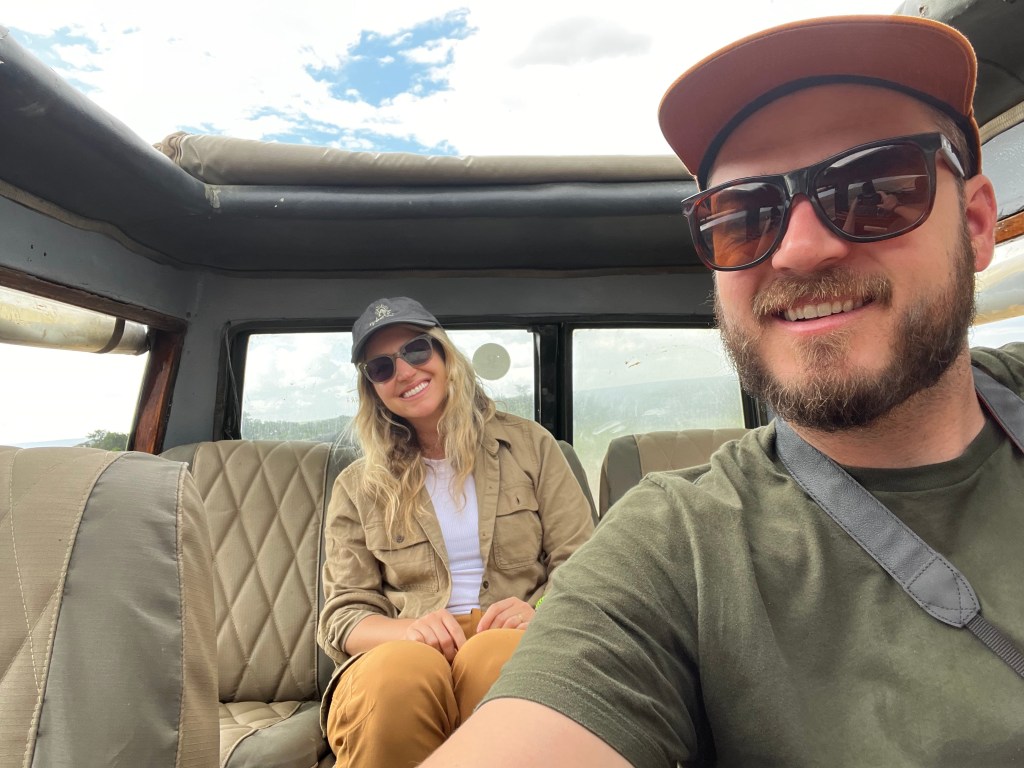
If you have a choice, ask for a Landcruiser. Some people were in Safari Vans and they seemed to handle a bit more poorly and have worse visibility. Plus, in a Landcruiser you feel like you’re on a true safari.
What time should I start my day?
By sunrise you should be out there in the park. If you’re on a private tour, you get to dictate pickup times. But do the sunrise wakeup call at either 5 or 6am. You’ll want to be awake and moving when the animals are teeming and most active. We are big sleepers, so having this criteria for best animal-viewing was not welcomed news. But once you see the rewards of all the beautiful animals, it was 100% worth it. Don’t miss out.

Is the Masai Mara affordable?
Can the Masai Mara be done on a budget? In short, no. But you can mitigate some costs. This is not the type of trip you can do without incurring additional fees and unforeseen costs here and there. We did everything we could to cut down on costs, and do the Masai Mara on a “budget” as much as we could though. This included, saving up our points and finding deals with our Chase Rewards card. It also included doing game drives and not booking a full safari, as I mentioned.
An example why you can’t do the park (or any safari) on a budget is park fees. To be in the park, it’s an $80 fee per adult for each day. If you are staying within the boundaries of the park, they charge $70 per adult per day, so a minor discount. That means you’ll have to pay at least $200 – $250 for a full day game drive plus tips. Again, this is on top of lodging. The most “budget” options for lodging are at least $100/night aside from a couple anomalies but mid-range will run you about $250/night. But the good thing is a lot of times these are all-inclusive with buffet style meals.
You’ll also want to accommodate tips in your budget. Tip big! These amazing guides are masters at their craft, and they deserve the crazy work that goes into driving in this difficult terrain. We spend a significant piece of our budget tipping all the people who helped us along the way, and don’t regret it one bit.
How long should I spend in the Masai Mara?
Based on our experience, spending two full days, max three full days, should be enough for you to see the park, and see most of the animals that the Masai Mara has to offer.
We found that once you’ve had intimate sightings of the animals you came to see, you certainly become a little less excited maybe the 4th, or 5th, or 50th time you see them. Which is horrible! The first time you see a giraffe is the most thrilling experience of your life. But as the day goes on, you start to find yourself saying, well I’ve already seen 50 giraffes, let’s go find that cheetah. Not to say it’s not still so freaking exciting, but your mentality shifts after a couple full days in a car 🙂
Best time of year
It seems like there’s never a bad time to visit, and it’s always a great time to see animals. The weather is pretty temperate in Kenya, and has been likened to that of California weather, due to the fact that it’s a higher elevation of 1,480 feet. We were told the weather is always relatively comfortable, which means it is comfortable for the animals too.
We had a full day of rain and it didn’t deter us from seeing wildlife in the slightest. We’re talking downpouring the entire day with wind and we saw just as many animals as the other days. So long story short, don’t stress about weather. Just be prepared with a rain jacket and something warm for evenings and to layer on.
The only true consideration is if you want to come to the Masai Mara to see the Great Migration. During the months July to October, the Mara is the scene of the epic annual trek of 1,5 million wildebeest from the Serengeti to the Masai Mara region. This is the most popular time to come visit the park, which also means the most cars, tourists, and highest costs. We were not here during the migration and still had the best experience.
Where to stay
For this leg of the trip we sprung for moderate accommodations near the Talek River, which is near the Ol Kiombo Airstrip. It was a great home base. It was a relatively busy part of the park (which we’re told is par for the course). When I say it was busy that meant, when there was an impressive animal sighting you could see about 15 cars surrounding you. However, the park is large and we rarely were bunched up. We drove through the park not seeing others much of the time, seeing plenty of wildlife along the way.
We stayed at two different accommodations that we booked:
PrideInn Mara:
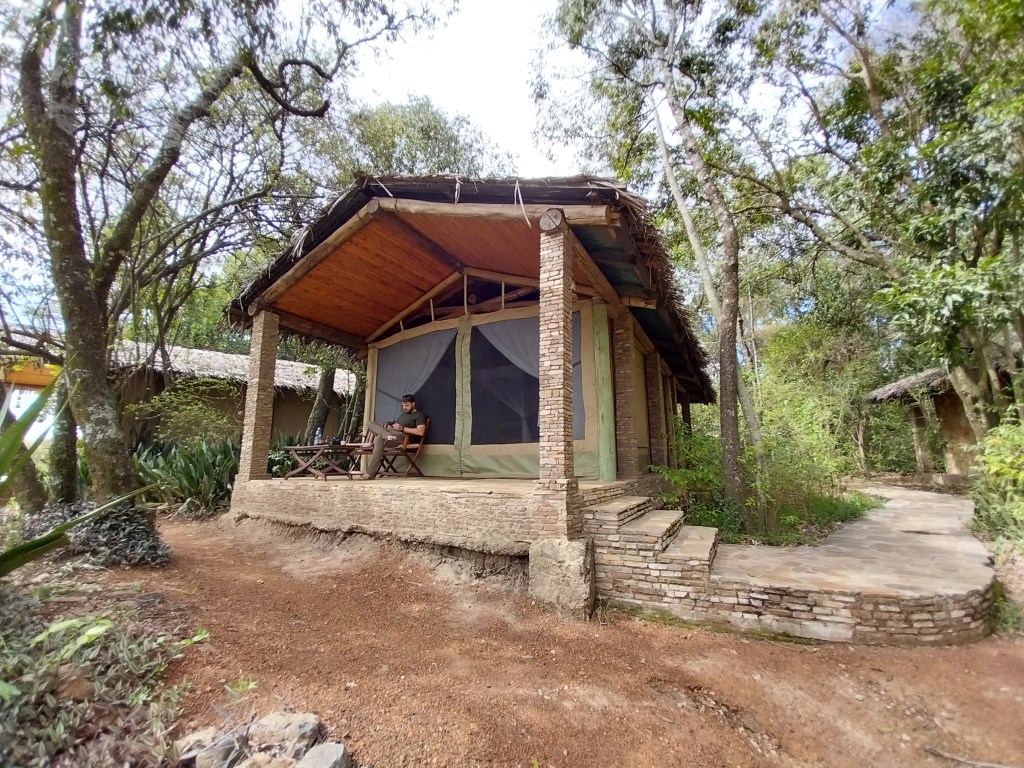
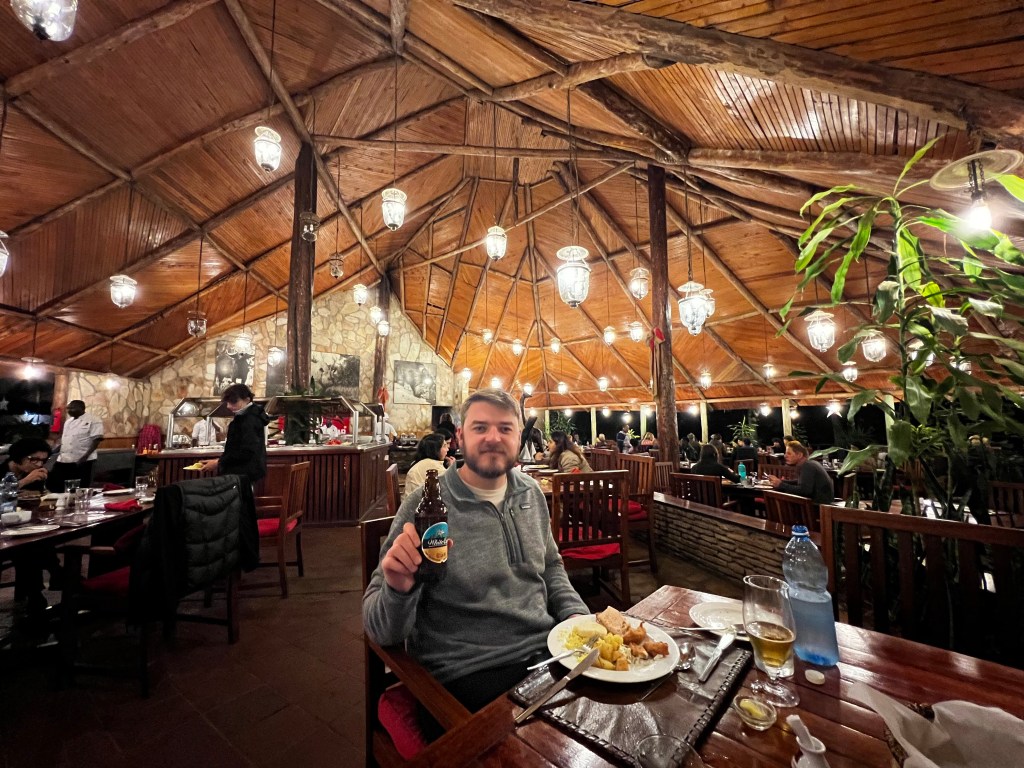
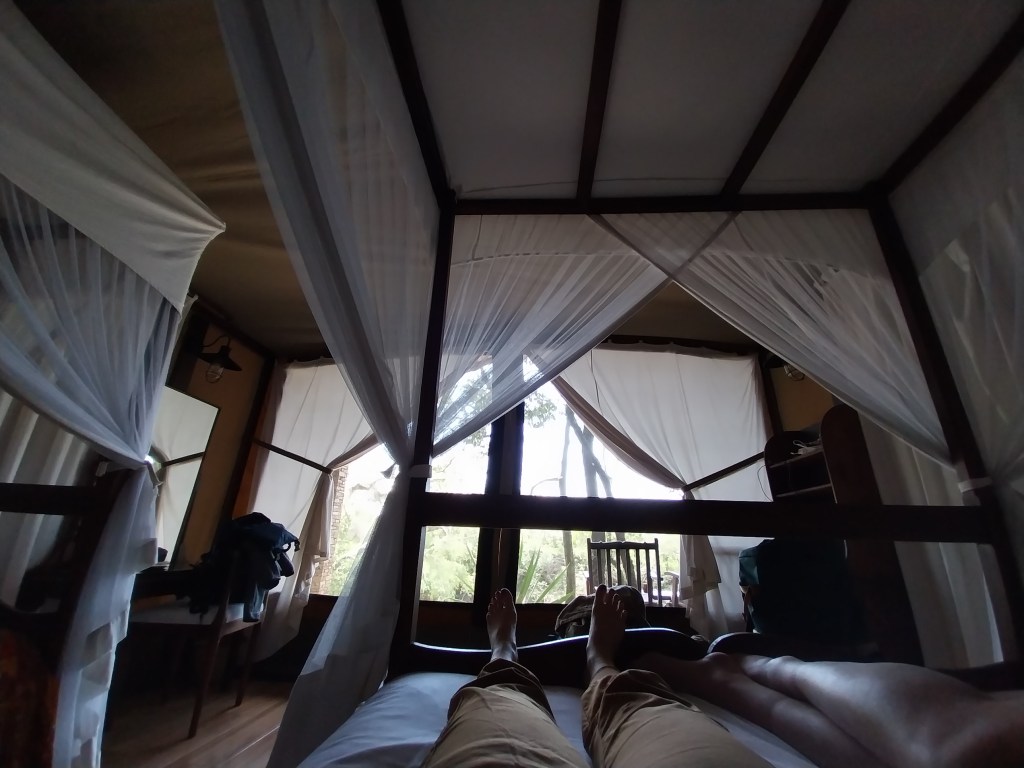
The PrideInn Mara was great. We opted for a tent and it was very comfortable. The main lodge was on the Talek river and was a beautiful place to sit and have a beer after a long and fun day on safari. What I didn’t realize when we were booking is that many of these hotels include food in the price of the room. The only additions are alcohol and drinks. The buffet there was fantastic. We found that many accommodations in Kenya served really amazing local dishes of course, including Ugali, a cornmeal dish that is used as the main carb in lots of dishes. There was also incredible Indian food at most places we ate including this hotel, since there are many Indian immigrants in Kenya. We were pretty stoked on this.
Fig Tree Camp:
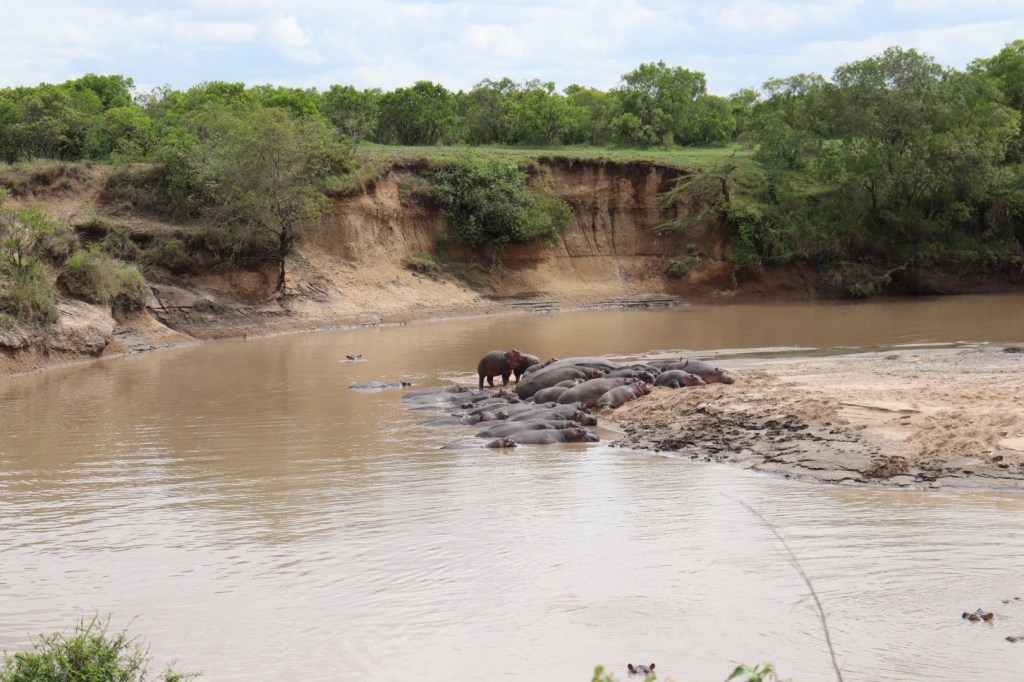
This place is awesome for one reason mostly – HIPPOS. If you opt to stay on the river, hippos live and hang out right below your room. Check out this baby hippo playing, for real. Hippos basically enter the rivers or lakes they live in every morning, and get out every night to go back on land to graze on grass in the evenings. Hippos are the most dangerous animal in Africa for their aggressiveness. However, in the Fig Tree camp the bank is so steep they can’t climb it and so you get to sit on your patio and observe them during the day in the river below. Just note: they are LOUD. They basically sound like loud jabba the huts laughing, as they enter and exit the water at dusk and dawn. But we loved this experience, how could you not want to get awoken by a hippo at 5am?!
Also the Fig Tree Camp is famous for their Hot Air Balloon safaris. You can take a hot air balloon up over the park at sunrise for 450 per person if you want to splurge. The hot air balloons fit about a dozen people. We didn’t opt into this experience, but if you had extra time and money to spend, could be super cool to have that vantage point.
What does the typical day in the Masai Mara look like?
Wildlife is most active during the morning and evenings. So, you’ll leave around 5 or 6am from your hotel. Many hotels will do a packed breakfast for you, and lots of accommodations even include this in your stay, so be sure to ask them the night before so you can eat out in the park.
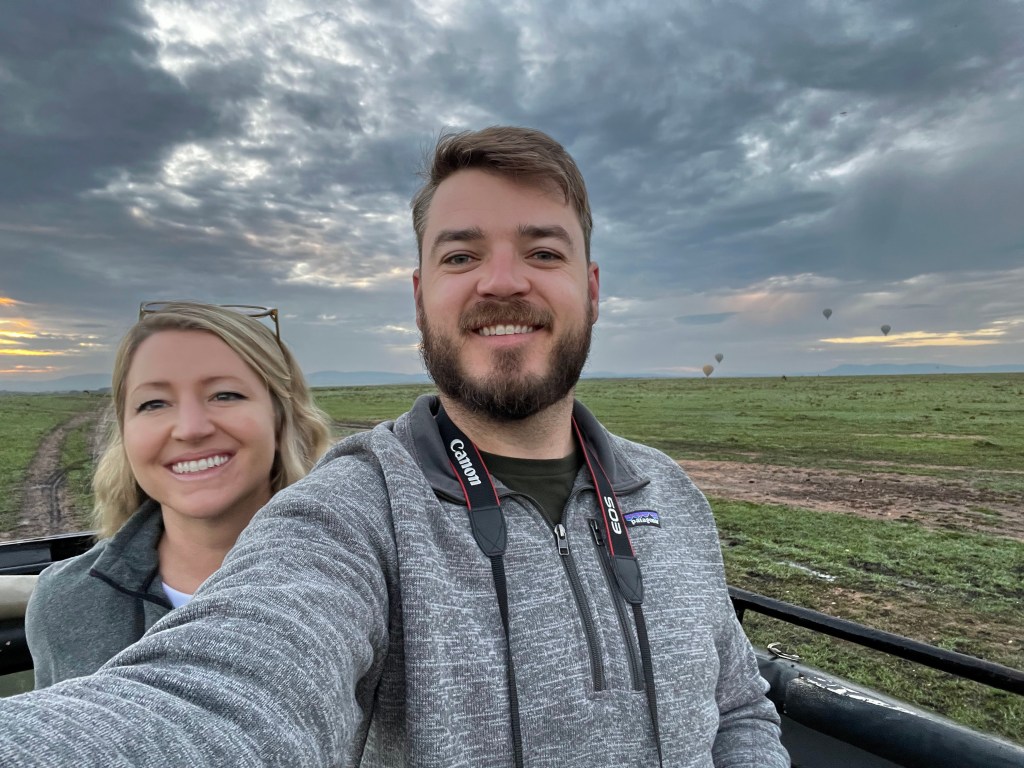
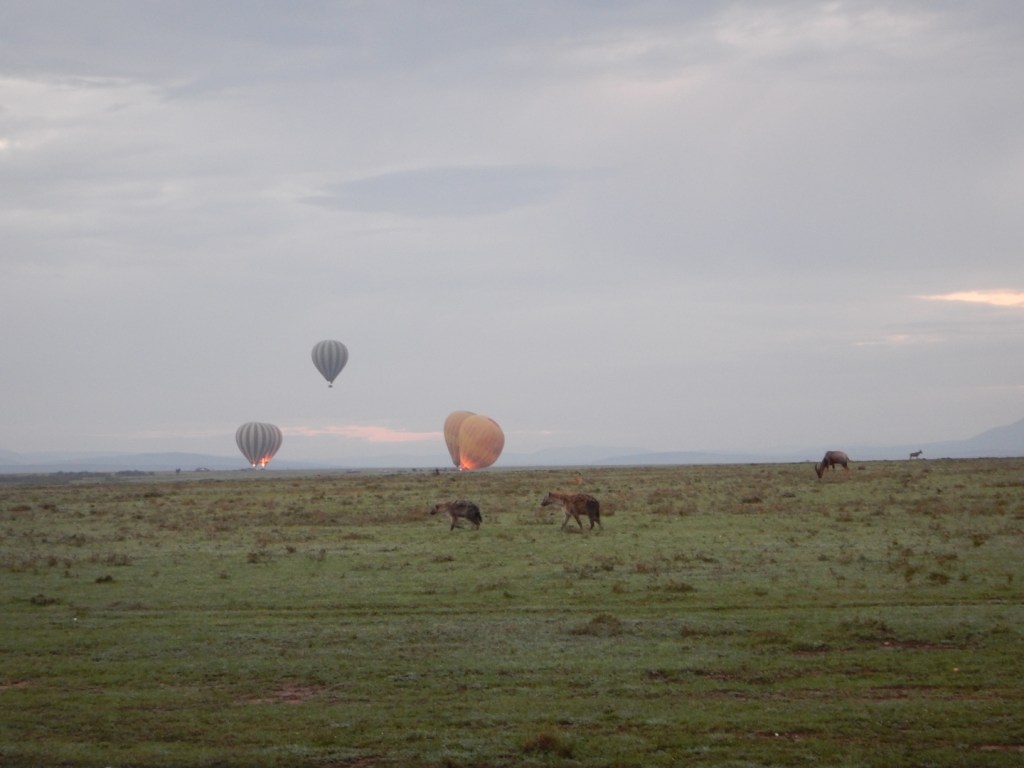
You’ll be traveling in a 4WD vehicle with your guide. You’ll catch the sunrise as you drive through the park and see dozens of animals all around you waking up. This is the same time that the hot air balloon safaris start to launch, and seeing them in the sky with the sunrise and animals is pure magic.
We stopped by a tree for breakfast every morning and ate breakfast in the park. Or as our guide called it “eating breakfast in the bush”. You’ll drive around some unique terrain for the morning looking for animals (and finding many). At the half day point, your driver will likely take you back to your lodge around noon to enjoy lunch and a (probably) a nap after your early wakeup call.
The Masai Mara gives you a true excuse to relax and unplug. Well to be fair, you have no other option. Many places don’t have WiFi in the room, or at all. Also power outages were a very common experience on our travels in this region. Our hotels had WiFi only in the lobby, and even still we found the connection to not be great, so we took advantage by reading as much as possible and journaling.
Your driver will then pick you up again around 3pm and take you out for an evening game drive until 6pm when the park closes. Again, wildlife is out and about during this period, so you’re sure to see a ton of different animals. You’ll then come back to your hotel for dinner and likely enjoy a show from the Maasai people with singing and dancing. Many hotels are run by and partner with the Maasai tribe and are rightly very proud of their culture, so they love to educate tourists about their traditions. We met so many kind, interesting Maasai people while we were there.


Is the Masai Mara crowded?
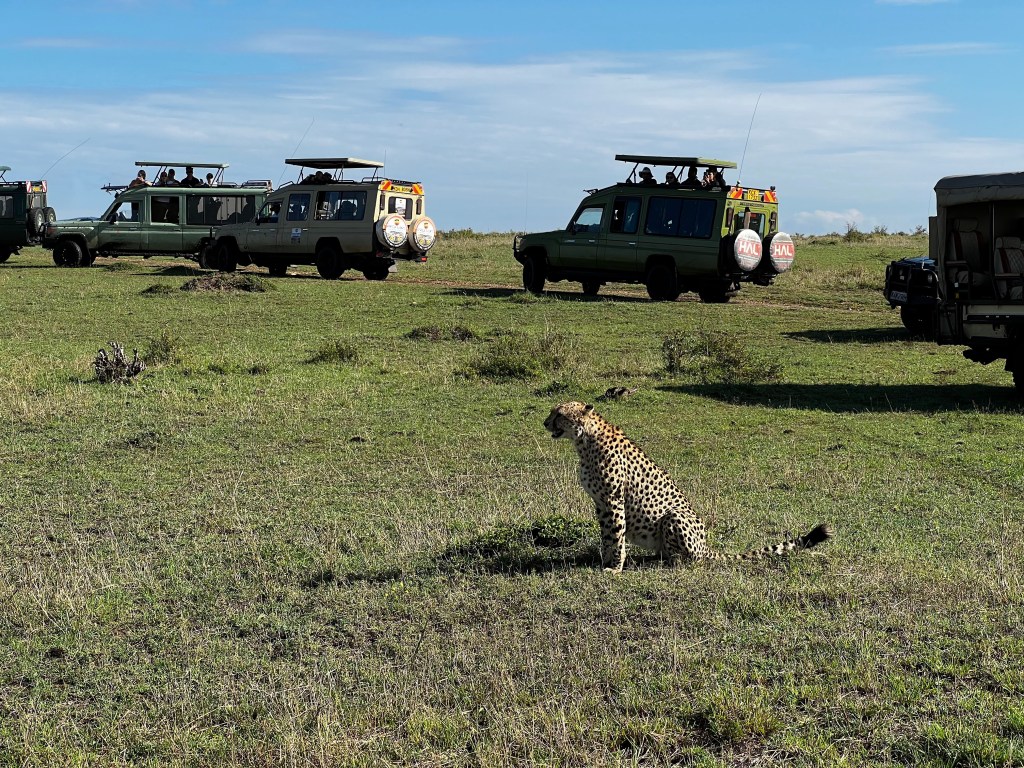
Kenya is one of the most popular choices to go on safari, meaning you can be joined by many other vehicles when there’s a major animal sighting – like a cheetah, or a leopard. When there is an animal sighting that’s rare, some tour guides do communicate with one another in order to signal the sighting. We found ours did less so since he was so familiar with the land and where to find the animals.
But, there’s a reason the Masai Mara is so popular, it’s epic! We had no regrets going here despite its popularity.
The “Big Five” in Masai Mara
Can you see the Big Five in the Masai Mara? Simply put, yes, you can, but it isn’t likely. The reason for this is that the rhino is very difficult to see in this large park. You’ll easily be able to see the Big 5 in Kenya, but you may have to visit multiple parks. We saw 4 of the 5 animals in the Masai Mara. If you’re looking to purely come to one country to see the Big 5, Kenya will have you covered, but not the Masai Mara.
What is the Big Five?
What does The Big Five mean? If you’re wondering what The Big Five is, it’s a term used for a list of five major animals you’ll see in Africa, including the lion, leopard, rhinoceros, cape buffalo, and African Elephant. The way that they got categorized is a sad one, this label comes from defining these five animals as those big game hunters would target in the 1800s due to the high price they would get from killing each one of these animals, and the “trophies” they brought. They were the most difficult animals to track and hunt on foot.

So, what kind of animals will I see in the Masai Mara?
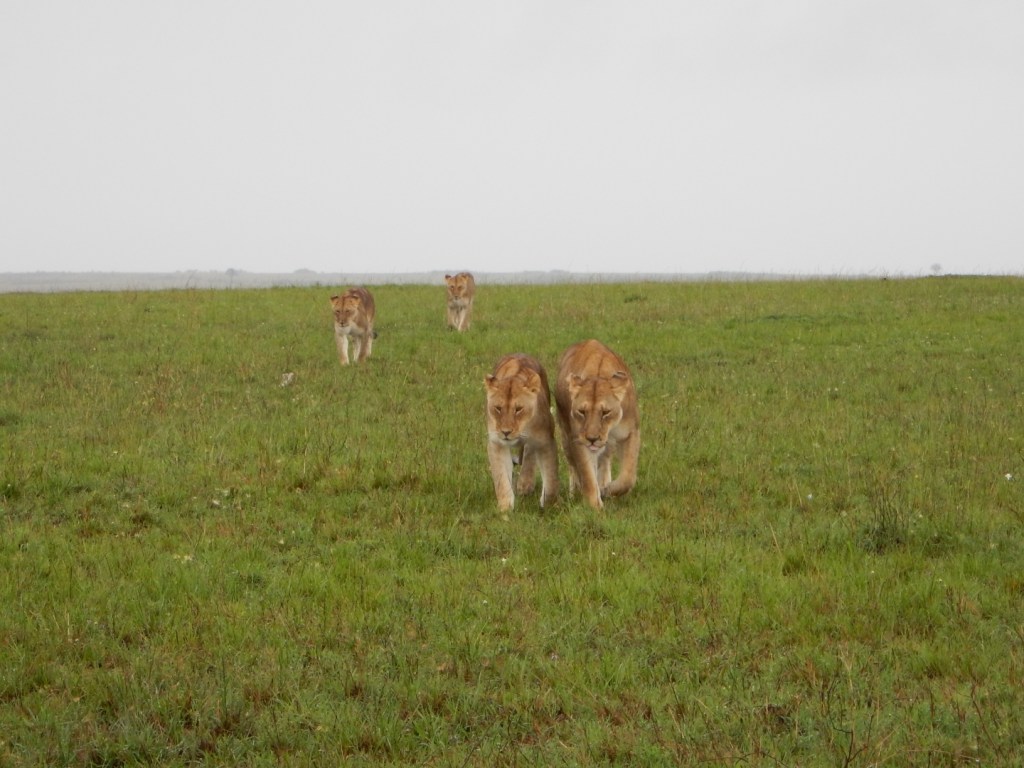
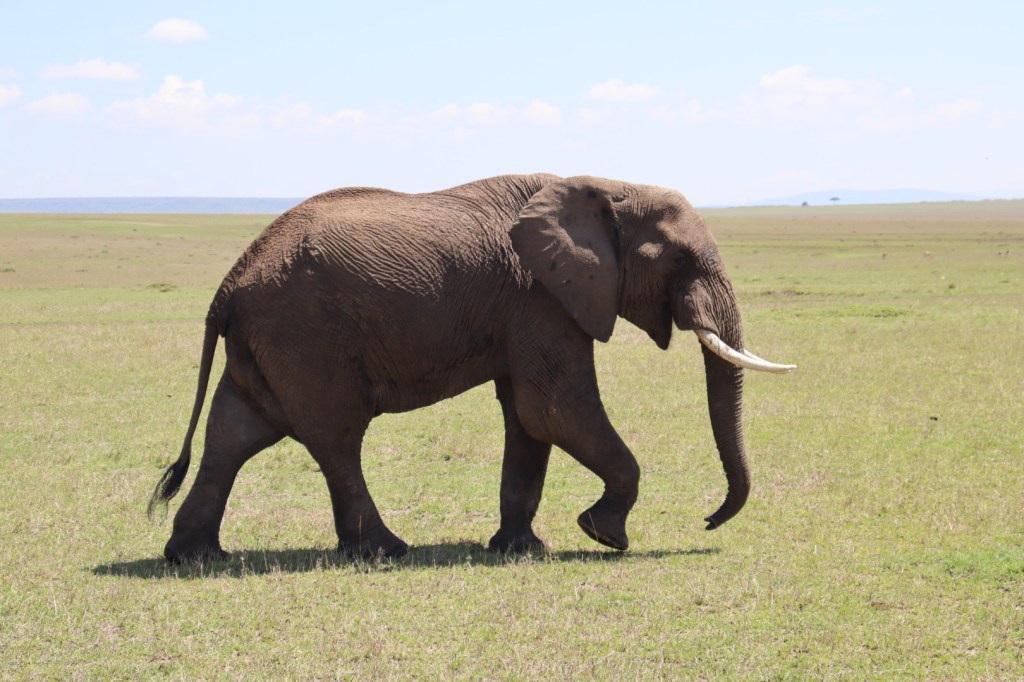
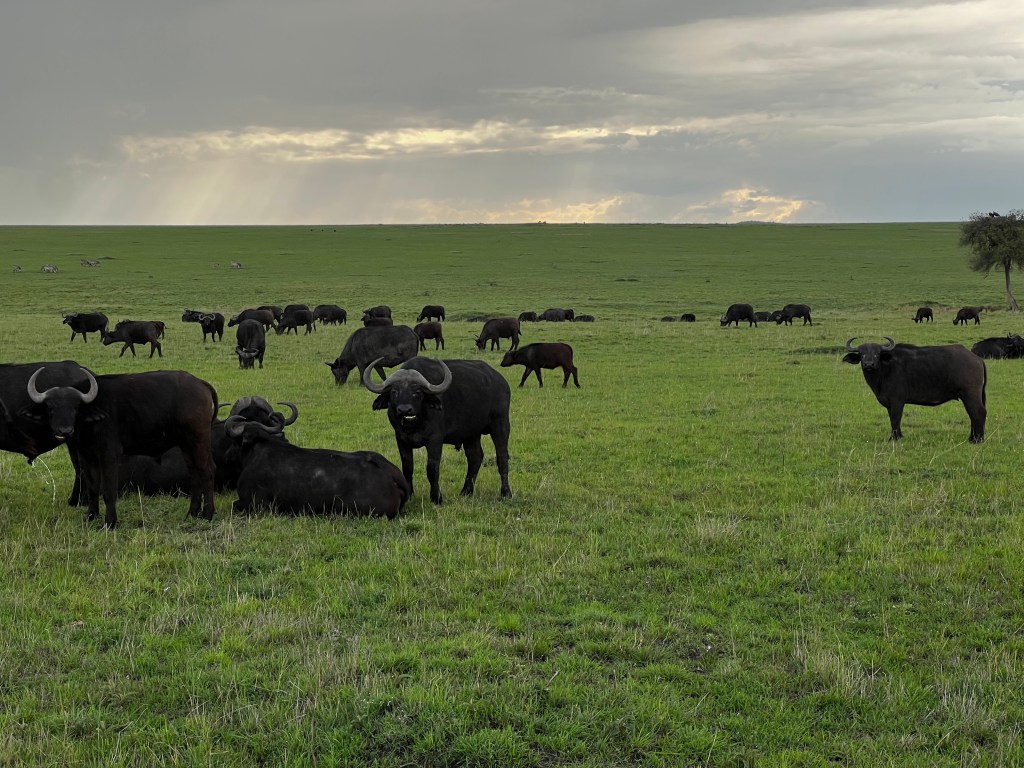
All of the kinds! 😉 But seriously, it seemed unreal how much wildlife diversity there was in the park. You’ll likely see four of the big five – the cape buffalo being the most prevalent. We saw about fifteen lions throughout our three days there, at least ten elephants and two leopards. We didn’t see the leopards until the last day since they’re a super illusive animal and we were told we were lucky we saw one even. They bring their killed prey up into trees and stay up there until they’re finished eating the animal over several days. The animal that’s least likely to see on the Big 5 list is the rhino as I mentioned. Out of the dozens of people we talked with, nobody had seen the rhino at the Masai Mara. Our guide said it was something they rarely saw. If the rhino is needed for you to check off your list, we had a lot of luck sighting rhinos in Lake Nakuru.
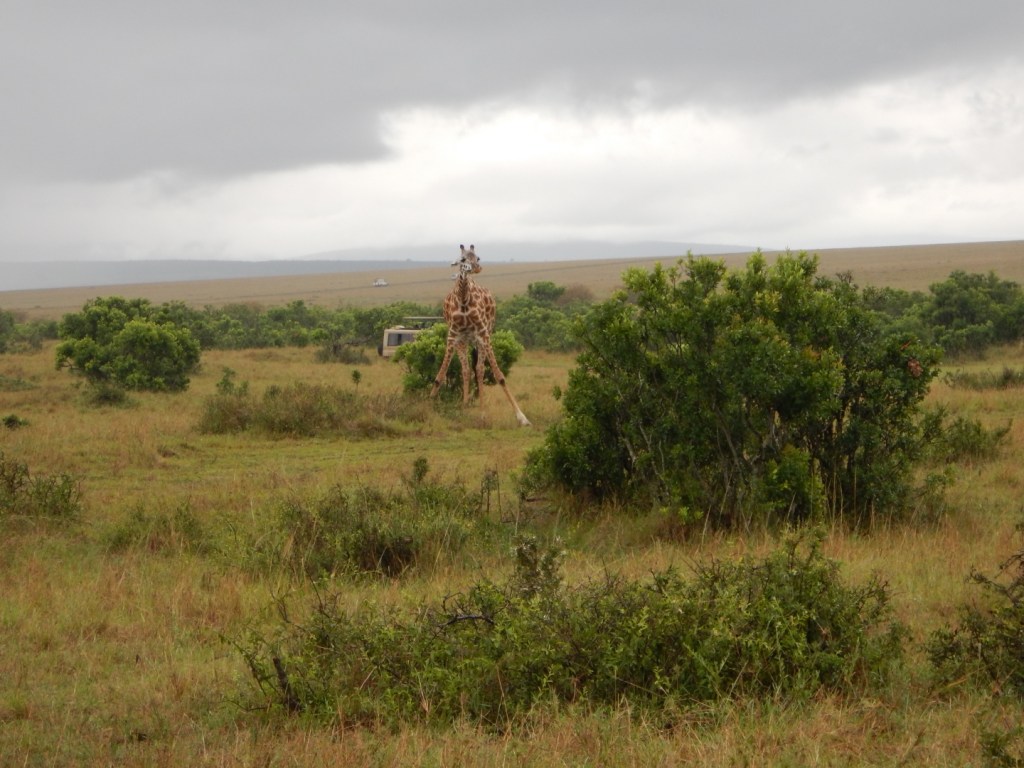
Aside from the big five animals, the Mara is home to a wide variety of other species of wild animals. The park was full of giraffes, hyena, impala, hippos, zebras, baboon, warthogs, waterbuck, wildebeest, mongoose, and jackles to name a few. We saw two cheetah brothers around the park multiple times. The park also has an incredible amount of birds, like the crowned crane, ostrich, storks, eagles to name a few species we saw often. We even saw a dik dik, the smallest species of antelope, which I was super excited about since I always see adorable memes about them…so basic 🙂
What other activities aside from game drives are there in the Masai Mara?
The true magic of visiting a national park like this lies in seeing its wildlife, so the game drives are the main attraction. But, there are a couple of other ways to explore this land. The first being, you can visit a local Maasai village to learn about their culture. They are incredibly proud of their culture – as they very well should be – and love to teach you about their traditions. We drove through the village and met some locals but did not do an official “tour” but we’re sure it’s awesome.
The other one really is taking a hot air balloon safari to get some different perspective. But as I had mentioned, this was a bit out of our budget. You can reserve these through balloon safaris through the Fig Tree Camp and a few other places.
Should I add the Masai Mara to my Kenya itinerary?
In my opinion, it’s an easy answer – YES. If you’re planning on traveling to Kenya and have a spare 2-3 days in your itinerary, I feel this park certainly should be prioritized. Right now, many of the other parks are experiencing extreme draught and therefore animal populations are getting affected. The Masai Mara is teeming with wildlife, and is a truly magical place to visit.
More questions about the Masai Mara? Ask them below!
 What a Lovely Place
Leave a comment